
Fiona Chappell | Psychologist

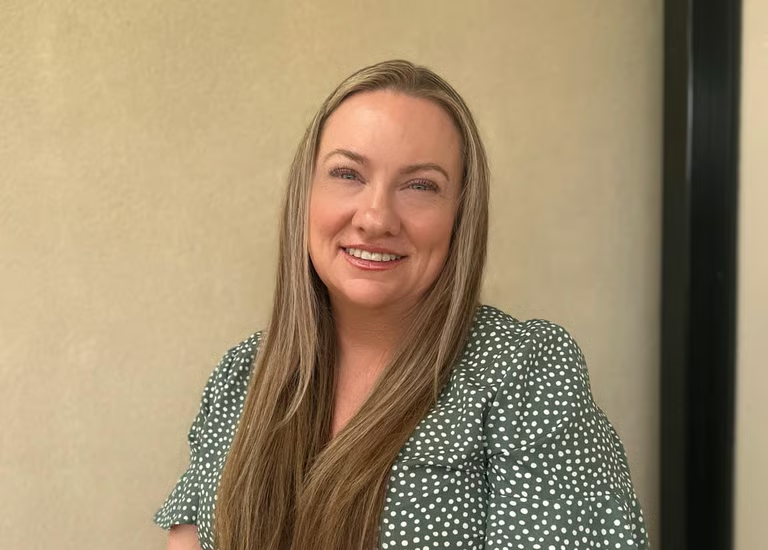
We are excited to announce that Fiona Chappell | Southern Psychologists now have a room at ACCESS Paediatric Clinic!
Fiona Chappell is a Registered Psychologist and Director of Southern Psychologists with extensive experience in the assessment of children and adolescents. With a background in education and a Master of Clinical Psychology, Fiona brings a strong developmental and child-centred approach to autism assessment and diagnostic clarification.
At Access Paediatrics, Fiona provides comprehensive Autism Spectrum Disorder (ASD) assessments in collaboration with Speech Pathology. Her assessment approach focuses on understanding each child’s unique neurodevelopmental profile and presentation, including patterns of social communication, interaction, emotional regulation, sensory processing, and adaptive functioning.
Assessments are formulation-led and aim to build a meaningful understanding of each child’s strengths, needs, and support profile. Fiona’s work is informed by child-centred, strengths-based frameworks that recognise the diversity of autistic presentations and the importance of understanding each child within their developmental, family, and educational context.
What is Autism Spectrum Disorder?
Autism Spectrum Disorder (ASD) is a neurodevelopmental difference characterised by variations in social communication, social interaction, sensory processing, and patterns of interests and behaviour. Autism presents across a spectrum, with each child showing a wide range of individual presentations, profiles, and developmental pathways.
Autistic children may experience differences in how they communicate, process sensory information, manage transitions, and regulate emotions. These differences are part of natural neurodiversity and may be associated with both areas of strength and areas that benefit from additional support.
What is an Autism Assessment?
An autism assessment is a structured clinical process used to determine whether a child meets diagnostic criteria for ASD and to develop a detailed understanding of their neurodevelopmental presentation.
Assessment is not only about diagnosis. It also supports:
- Understanding a child’s individual profile of strengths and support needs
- Clarifying how a child experiences and interacts with their environment
- Identifying co-occurring neurodevelopmental differences (e.g. ADHD, learning differences, emotional regulation needs)
- Informing educational and therapeutic planning
- Supporting access to appropriate services, adjustments, and supports
The Assessment Process
Autism assessments conducted by Fiona Chappell follow a comprehensive, evidence-based, and child-centred process and may include:
- Developmental and clinical interview with parents and caregivers
- Detailed developmental, medical, and psychosocial history
- Standardised autism assessment measures
- Assessment of social communication and interaction
- Sensory processing and emotional regulation profiling
- Functional and adaptive skills assessment
- Clinical observation across structured and naturalistic contexts
- Collateral information from schools and other services
Why Autism Assessment is Important
Autism assessment supports a clearer understanding of a child’s neurodevelopmental profile and support needs. It helps to:
- Build shared understanding between families, schools, and clinicians
- Inform educational planning and reasonable adjustments
- Guide targeted supports that align with the child’s profile
- Support family understanding and advocacy
- Facilitate access to appropriate services and funding pathways
Reporting and Outcomes
Families and referrers receive a comprehensive written report outlining diagnostic conclusions where appropriate, a summary of the child’s neurodevelopmental profile, and practical recommendations to support the child at home, in education, and within health and support systems.